- Home
- /
- Laparoscopic Infertility Surgery
Laparoscopic Infertility Surgery in Gurugram
Introduction to Laparoscopic Infertility Surgery
Difficulty conceiving can have different causes, including problems with ovulation, the fallopian tubes or other reproductive organs. In selected cases, laparoscopic surgery may help doctors examine and treat certain pelvic conditions that can affect fertility.
At MAITRIKA WOMEN HEALTH CARE CLINIC, located in Sector 15, Gurugram, women can enquire about consultations with Dr. Monu Yadav to discuss fertility concerns, previous investigation reports and suitable treatment options.
If you are searching for Laparoscopic Infertility Surgery in Gurugram, it is important to understand that surgery is not necessary for every woman experiencing infertility. The right approach depends on the cause of infertility, age, medical history, fertility goals and the findings of a specialist assessment.
What Is Laparoscopic Infertility Surgery?
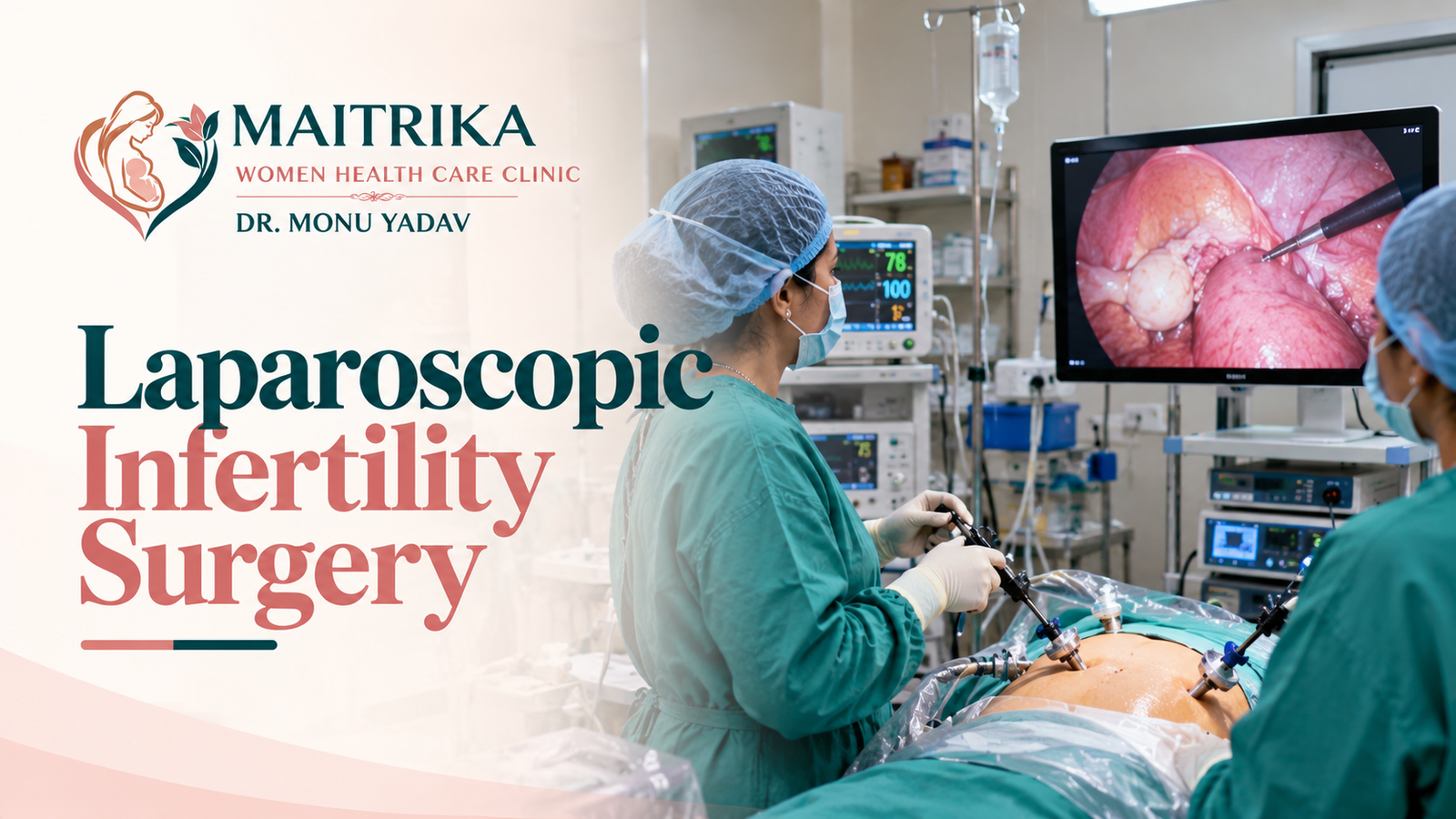
Laparoscopic infertility surgery is a minimally invasive surgical approach that may be used to investigate or treat selected conditions affecting the female reproductive system. It usually involves small incisions through which a camera and specialised instruments are inserted.
The camera allows the surgeon to examine structures inside the abdomen and pelvis, including the uterus, ovaries and fallopian tubes. When a suitable problem is identified, the surgeon may be able to treat it during the same procedure.
Laparoscopic Surgery for Infertility in Gurugram may be considered when investigations suggest that a pelvic condition could be contributing to difficulty conceiving.
However, laparoscopy is not a routine test or treatment for every infertility case. A fertility assessment should help establish whether surgery is likely to provide a meaningful benefit compared with other available options.
When May Laparoscopy Be Considered for Infertility?
Laparoscopy may be considered when symptoms, examination findings or previous investigations suggest a condition that could affect fertility.
Possible reasons include:
Suspected or confirmed endometriosis.
Pelvic adhesions, which are bands of scar tissue.
Selected abnormalities affecting the fallopian tubes.
Certain ovarian conditions.
Other pelvic problems that may be identified during infertility evaluation.
The decision should consider the expected benefits, potential risks and available alternatives. For example, a woman with a mild pelvic condition may not need surgery, while another patient may benefit from further surgical assessment.
Infertility Laparoscopy in Gurugram should be considered only after reviewing the patient’s circumstances and relevant investigation results. The purpose is to choose a suitable treatment plan, not to recommend surgery automatically.

Conditions That May Be Treated With Laparoscopic Surgery
Endometriosis and Fertility
Endometriosis occurs when tissue similar to the lining of the uterus grows outside the uterus. It may cause painful periods, pelvic pain, discomfort during intercourse and fertility concerns.
In selected cases, laparoscopic surgery may be used to assess and treat endometriosis-related tissue. The decision depends on the severity of symptoms, the extent of the condition, previous treatment and the patient’s reproductive plans.
Surgery may not be the best option for every patient. Its potential benefits should be weighed against risks, including possible effects on ovarian function when the ovaries are involved.
Treatment does not guarantee pregnancy or a permanent cure. Discuss the available options with a qualified healthcare professional before making a decision.
Pelvic Adhesions
Pelvic adhesions are bands of scar tissue that may develop after surgery, infection or certain medical conditions. They can sometimes cause pelvic organs to stick together or affect their normal movement.
In selected cases, laparoscopy may help identify adhesions and allow the surgeon to assess whether treatment is appropriate. The decision depends on the location and extent of the scar tissue and its possible effect on reproductive health.
Surgery itself can sometimes lead to new adhesions. Therefore, the potential benefits and risks should be discussed before proceeding.
Selected Fallopian Tube Conditions
The fallopian tubes carry the egg from the ovary towards the uterus. Problems affecting these tubes can sometimes make conception more difficult.
Certain tubal conditions may be evaluated or treated surgically. However, treatment depends on the nature and severity of the problem. Some conditions may be better managed through other fertility treatments.
A specialist may recommend further investigations before deciding whether surgery is appropriate. The possible effect on future fertility should be discussed as part of the treatment decision.
Selected Ovarian Conditions
Some ovarian conditions may require further assessment when they are associated with symptoms, unusual scan findings or possible effects on fertility.
If surgery is being considered, preserving healthy ovarian tissue and ovarian function is an important consideration. Certain ovarian procedures can affect ovarian reserve, which refers to the remaining supply of eggs.
The appropriate approach depends on the type of ovarian condition, the patient’s age, previous treatment and fertility goals. Surgery should not be recommended solely because a woman is experiencing difficulty conceiving.
How Is Laparoscopic Infertility Surgery Performed?
The exact procedure depends on the condition being treated and the treating surgeon’s assessment. The general process may include the following stages.
1. Review of Medical History
The healthcare team reviews your menstrual history, previous pregnancies, medical conditions, medicines and any earlier fertility investigations. Your partner’s fertility assessment may also be relevant.
2. Preoperative Assessment
If surgery appears appropriate, the treating team may recommend additional tests and explain the planned procedure. They will also discuss anaesthesia, potential risks and alternatives.
3. The Surgical Procedure
When laparoscopy is performed, the patient usually receives general anaesthesia. The surgeon makes small incisions and inserts a camera and specialised instruments to examine or treat the affected area.
4. Recovery and Follow-Up
After surgery, the healthcare team monitors the patient’s recovery and provides instructions about wound care, medicines and activity. Follow-up appointments help review the findings and discuss further fertility planning
Is Laparoscopic Surgery Right for Every Infertility Patient?
No. Infertility can result from several different factors, and the right treatment depends on identifying the likely cause.
An infertility assessment may include:
Reviewing menstrual history and ovulation.
Relevant blood tests.
Ultrasound examination when indicated.
Assessment of the fallopian tubes.
Review of previous pregnancies and medical conditions.
Assessment of the male partner’s fertility where appropriate.
Depending on the findings, treatment may involve medication, lifestyle guidance, assisted reproductive techniques, surgery or a combination of approaches.
For some women, surgery may not improve the chances of conception enough to justify its risks. Age, ovarian reserve, the duration of infertility and other fertility factors may also influence the decision.
A consultation helps you understand which investigations are needed and which treatment options are relevant to your circumstances.
Recovery After Laparoscopic Infertility Surgery
Recovery varies according to the operation performed and the patient’s general health. Some procedures are less extensive than others, so there is no single recovery period that applies to everyone.
Your treating team will explain how to care for the incision sites, manage discomfort and return gradually to daily activities. Follow the instructions provided and attend recommended follow-up appointments.
During recovery, you may need to:
Keep the incision sites clean according to medical advice.
Take prescribed medicines as directed.
Avoid heavy lifting or strenuous activity until advised.
Follow instructions about driving, work and exercise.
Discuss when it is appropriate to resume attempts to conceive or begin other fertility treatment.
Seek prompt medical attention if you develop severe or worsening pain, heavy bleeding, fever, breathing difficulty or other concerning symptoms.
Your healthcare professional can explain when further fertility assessment or treatment may be appropriate after recovery.
Potential Benefits of Laparoscopic Infertility Surgery
For selected patients, laparoscopic surgery may provide useful information or treatment for a specific pelvic condition.
Possible benefits include:
Direct examination: The surgeon can view pelvic structures during the procedure.
Treatment of selected conditions: Certain abnormalities may be treated during the same operation.
Smaller incisions: Laparoscopy generally uses smaller incisions than many open surgical procedures.
Recovery considerations: Some patients may experience less postoperative discomfort or a shorter recovery than after comparable open surgery.
These benefits depend on the condition and procedure. Most importantly, treating a pelvic abnormality does not necessarily resolve every cause of infertility.
Laparoscopic Fertility Surgery in Gurugram should be considered as one possible option within a broader fertility plan. It cannot guarantee conception, and other treatments may be more appropriate for some patients.
Risks and Limitations of Laparoscopic Infertility Surgery
Laparoscopic surgery has potential risks, like any operation. The level of risk depends on the procedure, the patient’s health and the condition being treated.
Possible risks include:
Bleeding or infection.
Complications related to anaesthesia.
Injury to nearby organs or blood vessels.
Formation of new pelvic adhesions.
Effects on ovarian tissue or fallopian tube function, depending on the procedure.
The need to change to open surgery in certain circumstances.
Surgery may also fail to improve fertility if the underlying cause lies elsewhere. For this reason, patients should discuss the expected benefits, risks and alternatives with their treating specialist.
Ask how the proposed operation may affect your future fertility and whether non-surgical treatment could be more suitable.
Laparoscopic Infertility Surgery in Gurugram at Maitrika Women Health Care Clinic
MAITRIKA WOMEN HEALTH CARE CLINIC is located in Sector 15, Gurugram, Haryana. Women experiencing fertility concerns can enquire about consultations with Dr. Monu Yadav to discuss their medical history, previous reports and possible next steps.
If you are looking for Laparoscopic Infertility Surgery in Sector 15 Gurugram, a consultation can help you understand whether a surgical assessment may be relevant to your condition. The need for surgery depends on the findings of an individual fertility evaluation.
Women searching for Laparoscopic Infertility Surgery on Jharsa Road, Gurugram can contact the clinic to ask about appointment availability and treatment arrangements.
Clinic address: Shop No. 4, Lower Ground, Pal Arcade, Friends Colony, Main Jharsa Road, Sector 15, Gurugram, Haryana 122001.
Please confirm whether a specific operation is performed at the clinic or would need to be arranged at another facility. The suitability of surgery and the expected effect on fertility should be discussed with the treating specialist.
Nearby Areas for Infertility Consultation
Women living in nearby parts of Gurugram can enquire about consultations at the clinic’s Sector 15 location.
If you are searching for Infertility Laparoscopy near Civil Lines, Gurugram, you can contact Maitrika Women Health Care Clinic to ask about fertility consultations and available treatment arrangements.
Women from Sadar Bazaar, Friends Colony, Sector 14 and Sector 31 can also enquire about appointments at the Sector 15 clinic. Confirm the clinic location and availability before visiting.
Visit us on Jharsa Road, Sector 15
Maitrika Women Health Care Clinic
Shop No. 4, Lower Ground, Pal Arcade, Main Jharsa Road, Friends Colony, HVPNL Colony, Sector 15, Gurugram, Haryana 122001
- Sector 15
- Jharsa Road
- Friends Colony
- Civil Lines
- Sadar Bazaar
Please confirm consultation availability and available services before you visit.
Frequently asked questions
Laparoscopic Infertility Surgery in Gurugram refers to a minimally invasive surgical approach that may be considered for selected conditions affecting fertility. It usually uses small incisions, a camera and specialised instruments. Surgery is recommended only when the clinical findings support its use.
Selected cases of endometriosis, pelvic adhesions, certain fallopian tube conditions and some ovarian conditions may be evaluated or treated through laparoscopy. The appropriate treatment depends on the diagnosis and the expected benefits and risks.
No. Laparoscopic Infertility Surgery in Gurgaon is not necessary for every woman experiencing infertility. A fertility assessment helps identify the likely cause and determine whether medication, other fertility treatments, surgery or a combination may be appropriate.
No. Laparoscopic surgery cannot guarantee pregnancy. It may help treat selected conditions associated with infertility, but conception also depends on other factors, including age, ovulation, sperm health and the condition of the reproductive system.
Depending on your circumstances, your healthcare professional may review your medical history, menstrual cycle, blood tests, ultrasound reports and fallopian tube investigations. A male partner's fertility assessment may also be relevant when planning treatment.
Potential risks include bleeding, infection, anaesthesia-related complications, injury to nearby organs and the formation of adhesions. Some ovarian or tubal procedures may affect future fertility. Your treating surgeon can explain the risks specific to the planned operation.
Recovery depends on the type of procedure, your general health and whether complications occur. Follow your treating team's instructions about wound care, activity and follow-up. Ask when it may be appropriate to resume fertility treatment or try to conceive.
You can contact Maitrika Women Health Care Clinic on Main Jharsa Road, Sector 15, Gurugram, to enquire about a consultation with Dr. Monu Yadav. Confirm appointment availability and whether the required surgical procedure is available or requires referral.
Women searching for an Infertility Consultation near Sadar Bazaar, Gurugram, can enquire about appointments at Maitrika Women Health Care Clinic in Sector 15. The clinic can confirm its location, consultation availability and current services.
Yes. Depending on the cause, options may include ovulation-related medication, other medical treatments, assisted reproductive techniques or monitoring. A fertility assessment helps determine which options are suitable and whether surgery offers a meaningful benefit.
Book an Infertility Consultation
Understanding the cause of infertility is an important step in choosing appropriate care. Laparoscopic surgery may be useful for selected conditions, but it is not the right choice for every patient and does not guarantee pregnancy.
Contact MAITRIKA WOMEN HEALTH CARE CLINIC in Sector 15, Gurugram, to enquire about a consultation with Dr. Monu Yadav. Discuss your symptoms, previous investigations and fertility goals, and confirm the availability and location of any proposed surgical procedure.