
- Home
- /
- Transvaginal Ultrasound (TVS)
Transvaginal Ultrasound Test in Gurugram
Introduction to Transvaginal Ultrasound (TVS)
A transvaginal ultrasound is a scan that helps healthcare professionals examine a woman’s reproductive organs, including the uterus, ovaries and surrounding pelvic structures. It uses sound waves to create images and does not use X-rays. A Transvaginal Ultrasound Test in Gurugram may be recommended to investigate pelvic pain, irregular bleeding, certain fertility concerns or selected early pregnancy concerns.
At Maitrika Women Health Care Clinic, Dr. Monu Yadav can discuss your symptoms and medical history to help you understand whether an ultrasound or further assessment may be appropriate. Women considering a Transvaginal Ultrasound in Gurgaon should confirm appointment availability and the services currently offered. The need for a scan depends on your individual circumstances, and the findings should always be interpreted by a qualified healthcare professional.
What Is a Transvaginal Ultrasound (TVS)?
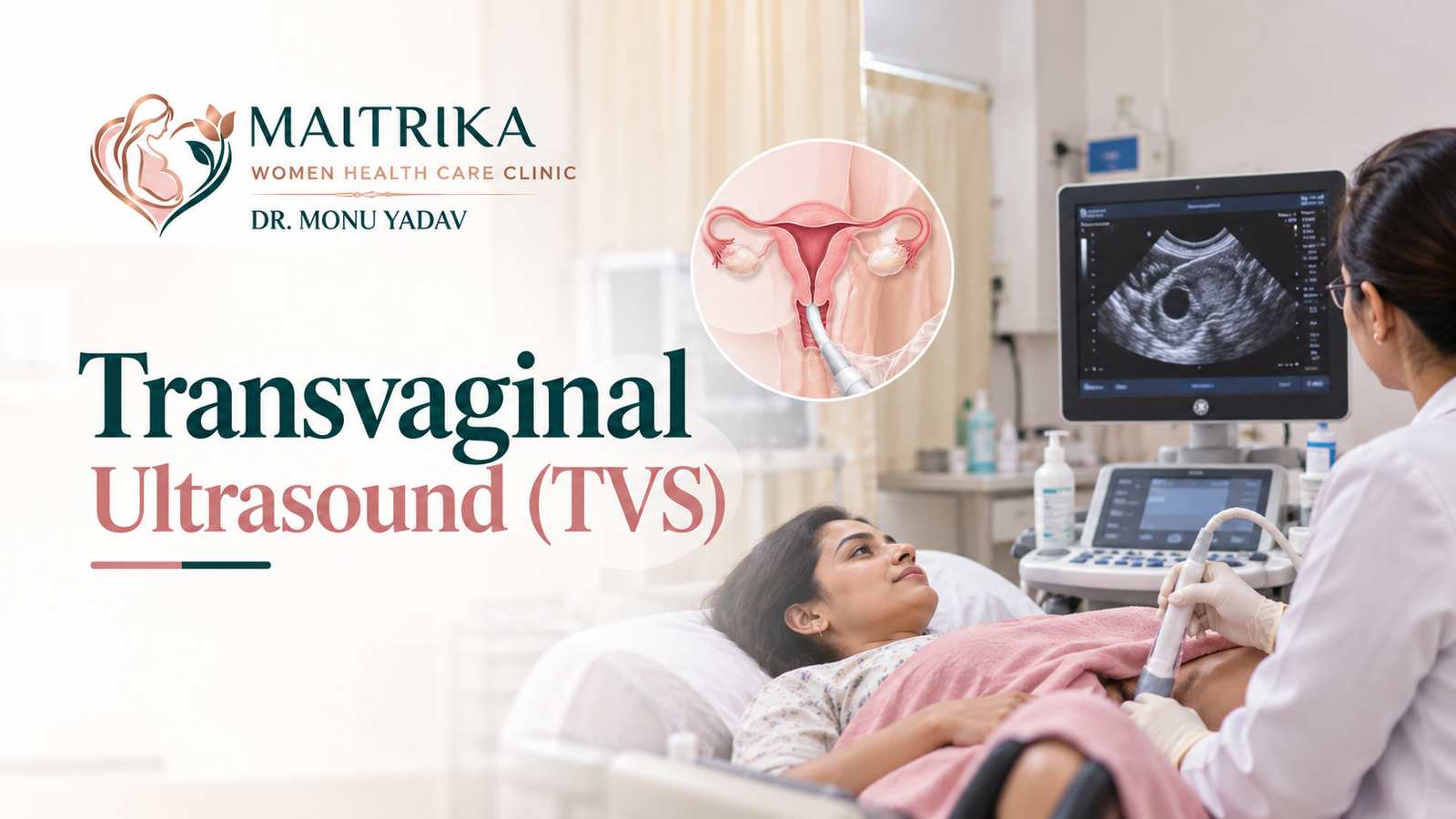
A transvaginal ultrasound, also called transvaginal sonography, is an examination in which a small ultrasound probe is gently inserted into the vagina to obtain images of the pelvic organs. Because the probe is close to the uterus and ovaries, it can provide detailed images in situations where an abdominal scan may not provide enough information.
A TVS Scan in Gurugram may help assess the uterine lining, ovarian follicles and certain changes in the reproductive organs. The clinician decides whether this type of scan is suitable based on your symptoms, medical history and the information needed.
Unlike an abdominal ultrasound, TVS does not usually require a full bladder. However, preparation instructions may vary, so follow the guidance provided before your appointment.
Why Is a TVS Scan Recommended?
A clinician may recommend a transvaginal ultrasound when a closer examination of the pelvic organs could help investigate symptoms or guide further care. It is not necessary for every woman, and the reason for the scan should be explained before the procedure.
Common reasons include:
Pelvic pain: To assess the uterus and ovaries when symptoms suggest a possible gynaecological cause.
Irregular bleeding: To examine the uterine lining and look for certain structural changes.
Ovarian assessment: To investigate an ovarian cyst or another finding that needs further review.
Fertility evaluation: To assess ovarian follicles, the uterus and other pelvic structures when relevant.
Selected early pregnancy concerns: To obtain detailed images when a clinician considers the scan appropriate.
Follow-up of known conditions: To monitor certain findings when repeat imaging is recommended.
A Transvaginal Ultrasound Test in Gurugram can provide useful information, but it cannot identify every possible cause of pelvic symptoms or infertility. Additional tests may be needed depending on the results and your medical history.
What Can a Transvaginal Ultrasound Detect?
The scan can help assess several structures in the female pelvis. What it shows depends on the reason for the examination and the stage of the menstrual cycle or pregnancy.
The uterus and uterine lining
TVS can provide images of the uterus and endometrium, which is the lining inside the uterus. It may help identify certain fibroids, possible polyps or changes in the lining that require further assessment. Not every abnormality can be confirmed with ultrasound alone.
The ovaries and ovarian follicles
The scan can show the ovaries and visible follicles. This information may be useful during fertility assessment or when investigating certain ovarian conditions.
Ovarian cysts
TVS can help identify and assess many ovarian cysts. The appearance of a cyst, its size and the patient’s symptoms help the clinician decide whether further evaluation or follow-up is appropriate.
Selected early pregnancy findings
When indicated, a transvaginal scan may help assess an early pregnancy. Findings depend on the stage of pregnancy and individual circumstances. Sometimes, repeat testing or another scan is needed before a clear conclusion can be reached.
A TVS Scan in Gurugram cannot diagnose every pelvic condition, confirm every cause of infertility or guarantee a particular pregnancy outcome. The clinician will explain the findings and whether any additional investigation is needed.
How Is a TVS Scan Performed?
The procedure is generally straightforward. The healthcare professional should explain the process and answer your questions before starting.
1. Explanation and consent
The clinician or ultrasound professional explains why the scan has been recommended and what it involves. You can ask questions about privacy, comfort and the procedure. Your consent should be obtained before the examination begins.
2. Getting ready
You may be asked to empty your bladder and change or adjust your clothing for the examination. The healthcare professional will explain how your privacy will be maintained.
3. Positioning for the scan
You will usually lie on an examination couch in a position that allows the scan to be performed. The healthcare professional will guide you through each step.
4. Ultrasound examination
A covered probe with lubricant is gently inserted into the vagina. The probe sends out sound waves that create images of the pelvic organs. The professional may move it carefully to obtain the required views.
A Transvaginal Ultrasound in Sector 15 Gurugram should be performed with appropriate consent, privacy and attention to your comfort. You can tell the healthcare professional if you experience pain or want the examination paused.
Transvaginal Ultrasound for Fertility Assessment
TVS may form part of a fertility assessment when a clinician needs information about the ovaries, follicles or uterine lining. The scan can help assess visible ovarian follicles and may be used during follicular monitoring to observe changes across the menstrual cycle.
It may also help identify certain structural findings that need further discussion. However, fertility depends on several factors, including ovulation, fallopian tube function, sperm health, age and other medical conditions.
A Transvaginal Ultrasound Test in Gurugram cannot determine every cause of infertility or guarantee that pregnancy will occur. Depending on your history, the clinician may recommend blood tests, other imaging or an assessment of your partner’s fertility.
TVS Scan During Early Pregnancy
A clinician may recommend a transvaginal ultrasound during early pregnancy when detailed imaging is needed. It may help assess pregnancy location and early developmental findings, depending on the stage of pregnancy.
A TVS scan is generally considered safe when medically indicated. However, the findings need careful interpretation. If the pregnancy is very early, the scan may not yet show all the expected features. In some cases, a repeat ultrasound or blood test may be recommended.
Not every pregnant woman needs a transvaginal ultrasound. The decision depends on symptoms, pregnancy stage and the clinician’s assessment. If you have pain or bleeding during pregnancy, seek medical advice promptly rather than relying on a scan appointment alone.
Transvaginal Ultrasound in Gurgaon
Women searching for a Transvaginal Ultrasound in Gurgaon should first understand why the scan has been recommended and what information it is expected to provide. A healthcare professional can review symptoms, previous reports and medical history to decide whether TVS is appropriate.
Maitrika Women Health Care Clinic is located at Shop No. 4, Lower Ground, Pal Arcade, Main Jharsa Road, Friends Colony, HVPNL Colony, Sector 15, Gurugram, Haryana 122001. Contact the clinic to confirm consultation availability and whether transvaginal ultrasound is currently offered.
Women travelling from other parts of Gurgaon or Gurugram may wish to confirm the appointment details and scan availability before visiting. A consultation being available does not automatically mean that every imaging service is performed on-site.
TVS Scan in Gurugram: What to Know Before Your Appointment
Before booking a TVS Scan in Gurugram, it can be helpful to clarify the purpose of the examination and any preparation requirements. Ask whether you should arrive with an empty bladder, whether the scan needs to be timed around your menstrual cycle and when you can expect the results.
If you have had a previous ultrasound, bring the report so the clinician can compare the findings when appropriate. Tell the healthcare professional about relevant symptoms, possible pregnancy and any concerns about the procedure.
The scan results should be considered alongside your medical history and symptoms. If further testing is needed, the clinician can explain the reason and discuss the available next steps.
Transvaginal Ultrasound in Sector 15 Gurugram
Women looking for a Transvaginal Ultrasound in Sector 15 Gurugram can begin by contacting a healthcare provider to discuss their symptoms and confirm the services available. The suitability of TVS depends on the clinical question, and another type of examination may be more appropriate in some circumstances.
At Maitrika Women Health Care Clinic, you can ask about consultation availability and whether transvaginal ultrasound is offered. Share your previous reports and explain the reason for the requested scan so the clinician can guide you appropriately.
Choosing the right investigation is more important than arranging a particular scan without medical advice. A qualified professional can explain what the examination may show, its limitations and whether further assessment is required.
Is a Transvaginal Ultrasound Painful?
Many women tolerate a TVS examination well. However, some may experience pressure or mild discomfort when the probe is inserted or moved. The experience can vary depending on individual sensitivity, symptoms and medical circumstances.
You should not feel pressured to continue if you are uncomfortable. Tell the healthcare professional if you experience pain, feel anxious or need the procedure to pause. They can explain the available options and discuss whether another approach may be appropriate.
If you have concerns about the examination, ask questions before giving consent. Understanding what will happen can help you feel more prepared.
How to Prepare for a Transvaginal Ultrasound
Preparation depends on why the scan has been recommended. In many cases, a TVS scan is performed with an empty bladder, but you should follow the instructions given by your healthcare professional.
Before your appointment:
Share your symptoms and the reason for the scan.
Tell the clinician if you may be pregnant.
Bring previous ultrasound reports and relevant medical records.
Mention any medicines or medical conditions that may be relevant.
Ask whether the scan needs to be scheduled at a particular point in your menstrual cycle.
Discuss any concerns about discomfort, consent or privacy.
A TVS Ultrasound Scan in Gurgaon should be scheduled according to your clinical needs rather than a standard timetable. If you are unsure about preparation, contact the healthcare provider before the appointment.
Visit us on Jharsa Road, Sector 15
Maitrika Women Health Care Clinic
Shop No. 4, Lower Ground, Pal Arcade, Main Jharsa Road, Friends Colony, HVPNL Colony, Sector 15, Gurugram, Haryana 122001
- Sector 15
- Jharsa Road
- Friends Colony
- Civil Lines
- Sadar Bazaar
Please confirm consultation availability and available services before you visit.
Frequently asked questions
A Transvaginal Ultrasound Test in Gurugram is an ultrasound examination that uses a probe inserted into the vagina to obtain images of the uterus, ovaries and other pelvic structures. It may be recommended for selected gynaecological, fertility or early pregnancy concerns.
A Transvaginal Ultrasound in Gurgaon may be recommended to investigate pelvic pain, irregular bleeding, ovarian findings, certain fertility concerns or selected early pregnancy symptoms. The decision depends on your medical history and the information the clinician needs.
A TVS Scan in Gurugram is generally well tolerated, although some women experience pressure or mild discomfort. Tell the healthcare professional if you feel pain or want the examination paused. You can discuss your concerns before the procedure begins.
Preparation depends on the reason for the scan. TVS commonly uses an empty bladder, but you should follow the instructions provided by your healthcare professional. Bring previous reports and share relevant symptoms or medical information.
A Transvaginal Ultrasound Test in Gurugram is generally considered safe when medically indicated during early pregnancy. The clinician interprets the findings according to the stage of pregnancy and your symptoms. Not every pregnant woman needs this scan.
No. TVS can assess the uterus, ovaries and certain pelvic structures, but it cannot evaluate every factor affecting fertility. Other investigations may be needed to assess ovulation, fallopian tubes, hormones or sperm health.
TVS uses a probe inside the vagina to obtain detailed images of the pelvic organs. An abdominal ultrasound uses a probe over the lower abdomen. The appropriate method depends on the clinical question and individual circumstances.
You can contact Maitrika Women Health Care Clinic in Sector 15, Gurugram, to confirm consultation availability and whether the scan is offered. Discuss your symptoms and bring previous reports so the clinician can advise on the appropriate next step.
A TVS scan may help assess an early pregnancy when medically indicated, but the interpretation depends on the pregnancy stage and findings. If it is too early to reach a clear conclusion, a clinician may recommend follow-up testing or another scan.
Requirements can vary between providers and the reason for the scan. Contact the clinic or healthcare professional to confirm whether a consultation or referral is needed and what preparation instructions you should follow.
Book a Consultation
A transvaginal ultrasound can help assess the pelvic organs when detailed imaging is needed. Whether you need a TVS scan depends on your symptoms, medical history and the clinician’s assessment.
Contact Maitrika Women Health Care Clinic to confirm consultation availability and current services. Discuss your concerns with a qualified healthcare professional before arranging an examination. The scan can provide useful information, but any diagnosis or treatment plan should be based on the complete clinical picture.